

July 6, 2026, 5:15:34 PM
Small Hive Beetle (Aethina tumida)
One does not need to be pessimistic to see that beekeeping worldwide is facing collapse. It is enough to be realistic and not bury one’s head in the sand. This is not about conspiracy theories, but about a real danger that is pushing the world towards bankruptcy.
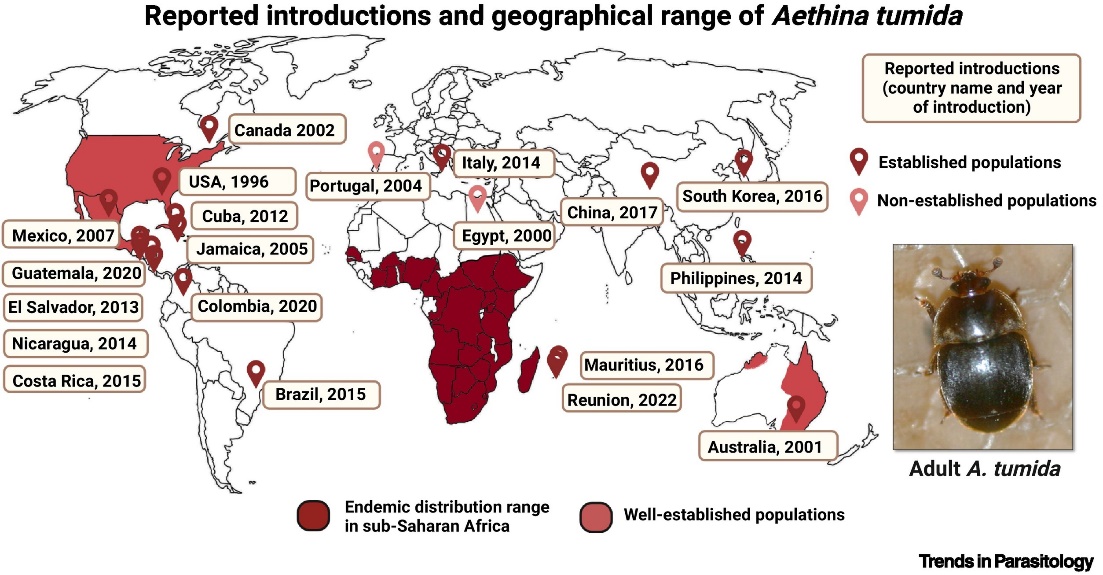
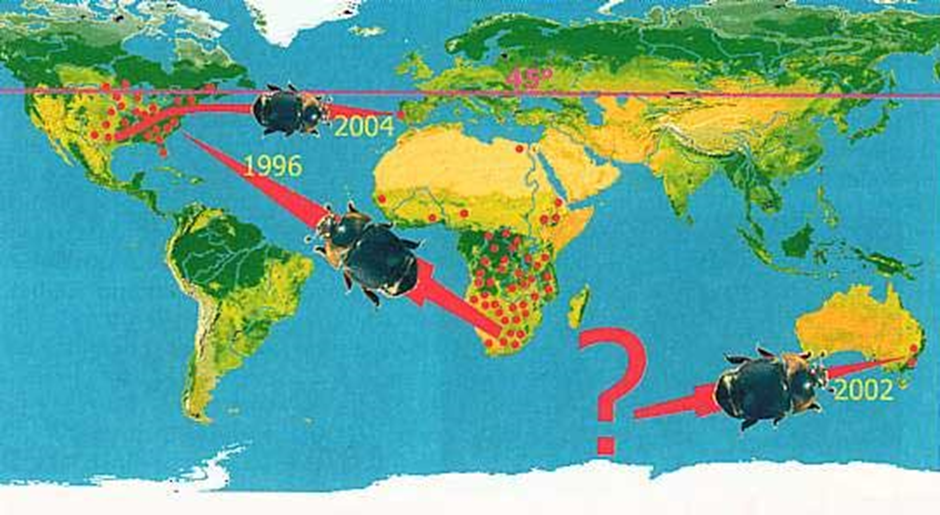
In short, the first information available to me about the small hive beetle in Europe dates back to 2004. That was when it was first detected in Portugal. Its worldwide spread began in South Africa, but there it cannot have a major destructive effect on bee colonies because the local African bees have effective defence mechanisms against it.
The beetles are about 5 mm long and about 3 mm wide. They can fly independently. Within one year, they can spread approximately 20 km from the original outbreak area. The beetles probably entered Portugal through imports of queen bees from the United States. The only obstacle to their spread is the oceans.
Small hive beetles (SHB) are attracted by the smell of bees, bee products, and other hive beetles. A single female SHB lays around 1,000 eggs during her lifetime, placing them in cracks and crevices of the hive, as well as on the frames, combs, and inside bee cells. The eggs are white and laid in clusters resembling bunches of grapes.
The SHB can chew through the cappings of sealed brood and lay its eggs inside, filling the cell with them. The larvae hatch after three days and begin feeding on honey, pollen, and brood. After about 13 days, the larvae reach approximately 10 mm in length, leave the hive, and burrow into the soil at depths of up to 80 cm and at distances of up to 80 metres from the nest.
In the soil, the larvae form pupae. The pupal stage lasts from two to four weeks. Adult beetles emerge from the pupae and search for new bee colonies in which to establish themselves.
The impact on bee colonies is devastating. Almost nothing visible remains; there is nothing left that can be used either by the bees or by people.
Controlling SHB is practically impossible, or possible only at the cost of the total destruction of the colonies — by burning them and digging up the soil to a depth of up to one metre and over an area extending approximately 80 metres from the apiary, combined with heavy treatment using insecticides.
The situation is further complicated by the fact that SHB can feed on other fruits, including melons, mangoes, and oranges. The pest also affects bumblebee colonies.
There is always a danger that bees may be imported into Europe from an unregistered outbreak area.